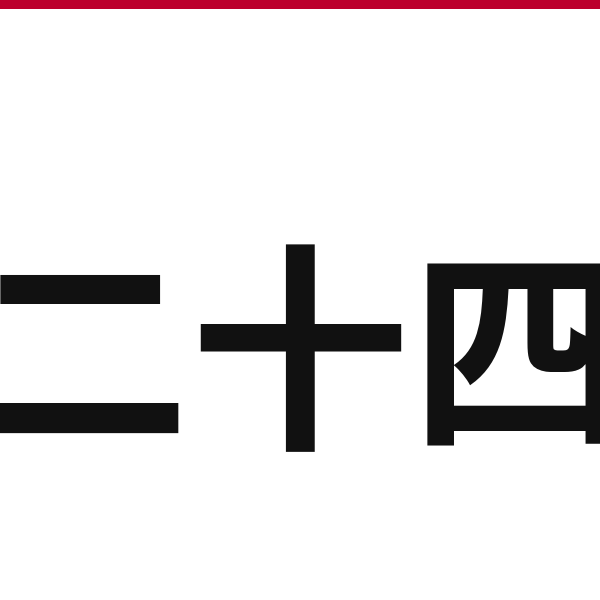
How to use "24" in a sentence
Here are practical examples in polite everyday Japanese:
Other ways of saying "24" in Japanese
Japanese has multiple counting systems, so "24" changes depending on what you are counting:
- nijuuyon (二十四) — Standard number 24. 'Nijuushi' is avoided due to the death association with 'shi.'
- nijuuyon-mai (二十四枚) — Counter for flat objects — 24 sheets, tickets, or shirts.
- nijuuyon-hon (二十四本) — Counter for long objects — 24 bottles, pencils, or umbrellas.
- nijuuyon-dai (二十四台) — Counter for machines and vehicles — 24 cars, computers, or televisions.
- nijuuyon-sai (二十四歳) — Age — 24 years old.
- nijuuyon-nin (二十四人) — Counter for people — 24 people.
The number 24 sits at an interesting crossroads between 6 in Japanese and the larger tens. Once you see how 24 works, 30 in Japanese becomes easy because it follows the same multiplication logic. If you want to explore another compound number with cultural weight, 15 in Japanese appears in traditional coming-of-age ceremonies.
Fun fact about "24" in Japanese culture
The Twenty-four Solar Terms (Nijushisekki) form the ancient agricultural calendar that still appears on every Japanese wall calendar today. This system divides the year into 24 micro-seasons, each lasting approximately 15 days, with poetic names like Shunbun (spring equinox), Shoman (grain full), and Taisetsu (heavy snow). Farmers historically used these terms to decide when to plant rice and harvest vegetables, and the system remains so culturally embedded that weather reporters still reference them during evening broadcasts. The 24-term calendar originated in China over 2,000 years ago but was carefully adapted to Japan's island climate during the Nara period.
December 24th is the biggest date night in Japan, surpassing even Valentine's Day in romantic intensity. Couples book restaurant reservations months in advance, and illumination displays at Tokyo Midtown and Roppongi Hills reach their peak on this night. KFC Japan runs its famous 'Christmas Chicken' campaign because turkey is virtually unavailable, and the 24th has become so romantically charged that being alone carries genuine social stigma for young adults. This uniquely Japanese reinterpretation of a Western holiday demonstrates how the number 24 marks a cultural pivot point between work and celebration.
Japan's twenty-four-hour culture defines urban life in ways that surprise visitors from countries with strict closing times. Convenience stores (konbini) operate 24/7/365 and sell everything from onigiri to concert tickets and utility bill payments. Manga cafes, capsule hotels, and sento bathhouses also run around the clock, creating a safety net for night workers, stranded travelers, and anyone who misses the last train. The 24-hour Daiso in Shibuya and all-night ramen shops in Shinjuku are institutions that could only exist in a society where the number 24 represents opportunity rather than inconvenience.
In Japanese film and television production, the 24-frame-per-second standard creates a subtle cultural reference point. When directors discuss 'nijuuyon ko' (24 frames), they are referencing the smooth motion that Japanese audiences expect from domestic productions. Anime studios historically used 24 frames as the baseline for fluid animation, with lower frame rates reserved for budget scenes. The number 24 is therefore embedded in the visual language of Japanese media.
The 24th year of the Showa era (1949) marked the end of post-war rationing and the beginning of Japan's economic recovery. Historians often cite this year as the turning point when Japanese households began to experience genuine consumer choice after years of scarcity. The number 24 thus carries historical weight as the digit that separated survival from prosperity for an entire generation.