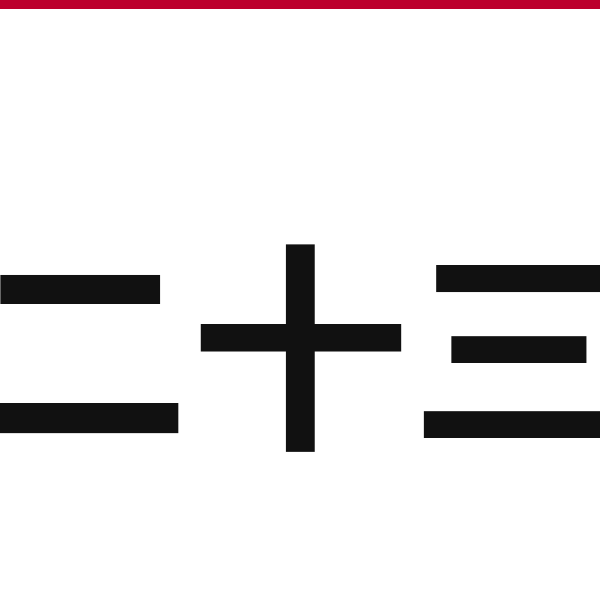
How to use "23" in a sentence
Here are 5 practical examples in polite everyday Japanese:
Other ways of saying "23" in Japanese
Japanese has multiple counting systems, so "23" changes depending on what you're counting:
- nijuusan (二十三) — Standard number 23.
- nijuusan-mai (二十三枚) — Counter for flat objects — 23 sheets/tickets.
- nijuusan-hon (二十三本) — Counter for long objects — 23 bottles/pencils.
- nijuusan-dai (二十三台) — Counter for machines/vehicles — 23 cars/computers.
- nijuusan-sai (二十三歳) — Age — 23 years old.
The number 23 is built from 10 in Japanese multiplied by two, plus three. Once you master the tens, counting to 99 becomes straightforward. When you are ready to jump to larger figures, 100 in Japanese is the next milestone. For a look at an even bigger scale, see 10000 in Japanese, a number that carries special cultural weight.
Fun fact about "23" in Japanese culture
February 23rd is a national holiday in Japan called Tennou Tanjoubi (天皇誕生日), the Emperor's Birthday. Emperor Naruhito was born on February 23, 1960, and since his ascension in 2019, this date has become an annual public holiday marked by imperial greetings at the palace and widespread celebration across the country.
The number 23 also holds deep geographic meaning in Japan. When locals say "Tokyo," they usually mean the Tokyo 23 Wards (東京二十三区), the core urban district that includes Shibuya, Shinjuku, Minato, and 20 other wards. This distinction matters because "Tokyo" as a prefecture actually sprawls far beyond these 23 wards into mountainous western regions and remote islands.
In Japanese sports, soccer star Shinji Kagawa made the number 23 iconic while playing for Borussia Dortmund and the Japan national team. His success helped popularize soccer among young Japanese athletes, and the Japan Football Association saw a measurable spike in youth registrations during his peak years wearing that jersey number.